Projects
Quantum Radar Team
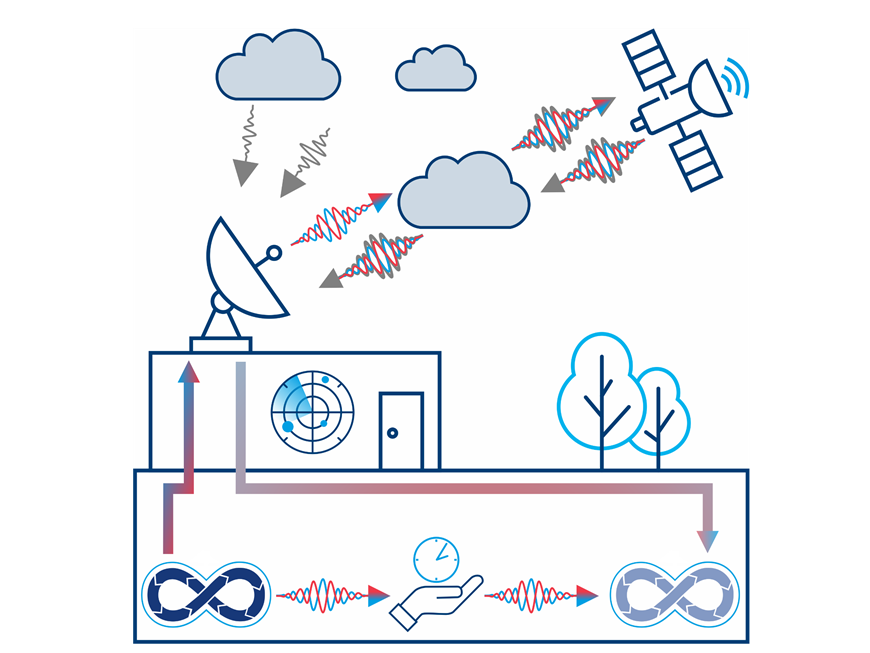
Klassische Radartechnologien (in Luft‐ und Raumfahrt, Messtechnik oder autonomes Fahren) stoßen bereits heute an ihre physikalischen Grenzen, hauptsächlich limitiert durch das Rauschen in der Umgebung. Ab einem gewissen Signal‐zu‐Rausch‐Verhältnis (SRV) ist eine Informationsgewinnung mittels herkömmlicher klassischer Mikrowellensignale nicht mehr möglich. Durch die Verwendung von Quantenmikrowellen und die daraus resultierenden neuen Korrelationsmöglichkeiten kann man die Informationsgewinnung jedoch weiter verbessern. Dieser sogenannte Quantenvorteil kann signifikant zur Reichweitensteigerung oder zur Reduktion der Signalleistung beitragen. Eine alternative Technologie zur grundsätzlichen Steigerung des SRV ist derzeit nicht bekannt.
Zunächst soll der Quantenvorteil unter Laborbedingungen (Temperaturen im Bereich von milliKelvin, Vakuum) nachgewiesen werden. Anschließend müssen geeignete Technologien entwickelt werden, um die unter milliKelvin‐Temperaturen erzeugten Quantenmikrowellen auch über Antennen im ungekühlten Freiraum abstrahlen und wieder detektieren zu können. Hierbei gilt ein besonderes Augenmerk der anspruchsvollen Signalverarbeitung. Diese muss auch theoretische Untersuchungen von Faktoren mit technischer Relevanz, z.B. Dekohärenz, beinhalten. Insgesamt ergibt sich daraus eine Roadmap hin zu feldtauglichen Implementierungen, und somit zur kommerziellen Verwertung.
Das Vorhaben bezieht sich auf bereits vorhandene wissenschaftliche Grundlagen. Die Innovation steckt daher vielmehr im Forschungs‐ und‐ Entwicklungsprozess, bei dem Systementwicklungsaufgaben wie Skalierung und die Bewältigung technologischer Herausforderungen im Vordergrund stehen. Neben dem Know-How zum Quantenradar werden auch ganz allgemein Quantentechnologien mit supraleitenden Schaltkreisen auch in Deutschland nachhaltig etabliert.