

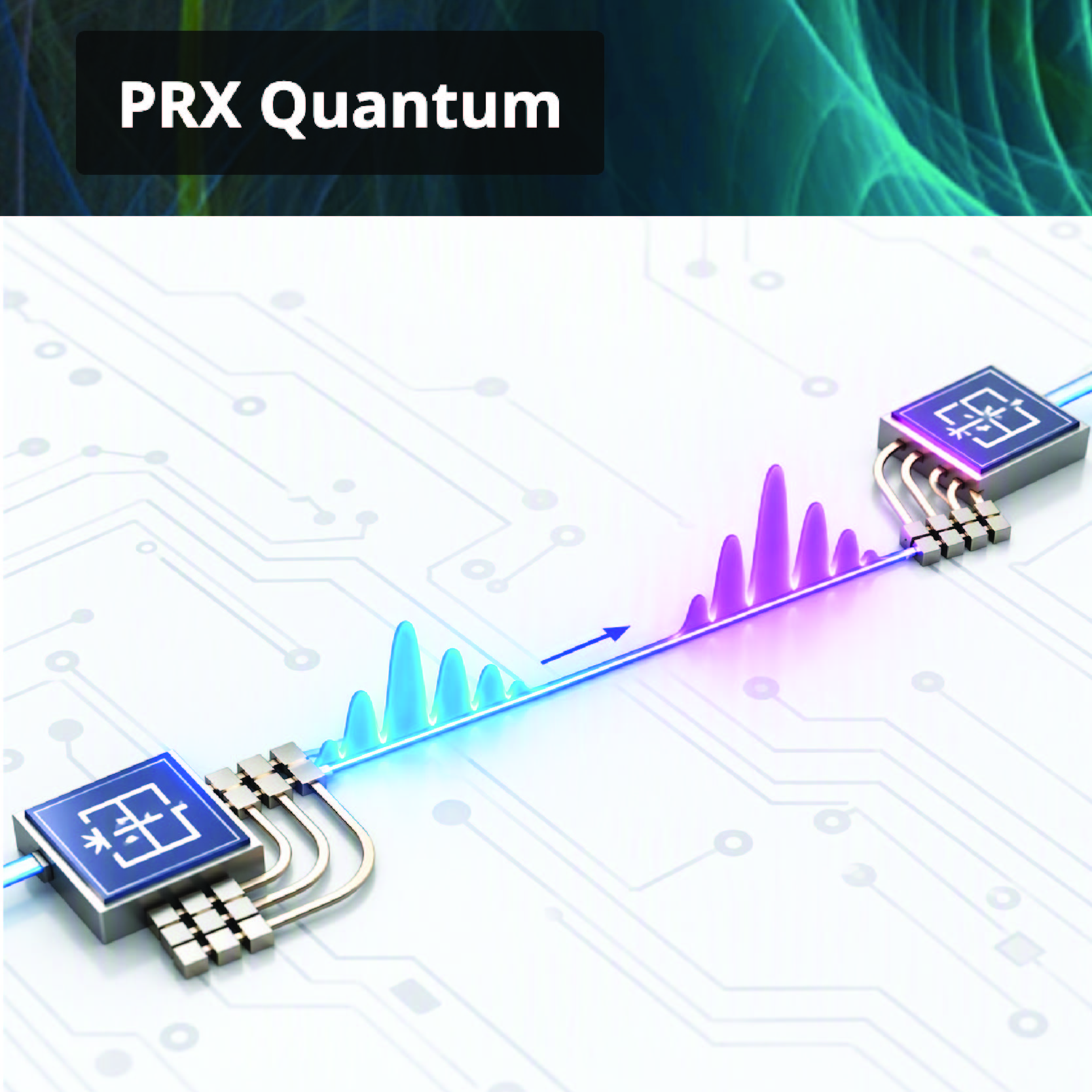
Transferring quantum information between nodes of a quantum network typically relies on carefully timed control pulses that shape the emission and absorption of single photons. As part of an international collaboration, researchers at WMI have now shown that this functionality can instead be engineered directly into the hardware, allowing the transfer to occur fully "on its own." Such passive quantum communication hardware can be realized using so-called superconducting giant atoms, which are superconducting qubits coupled to a microwave waveguide at multiple connection points. In their theoretical study, published in PRX Quantum, the researchers demonstrate that this approach not only eliminates the need for additional control electronics but is also highly robust against fabrication imperfections. Their work highlights a promising route toward simpler and more scalable quantum communication network.
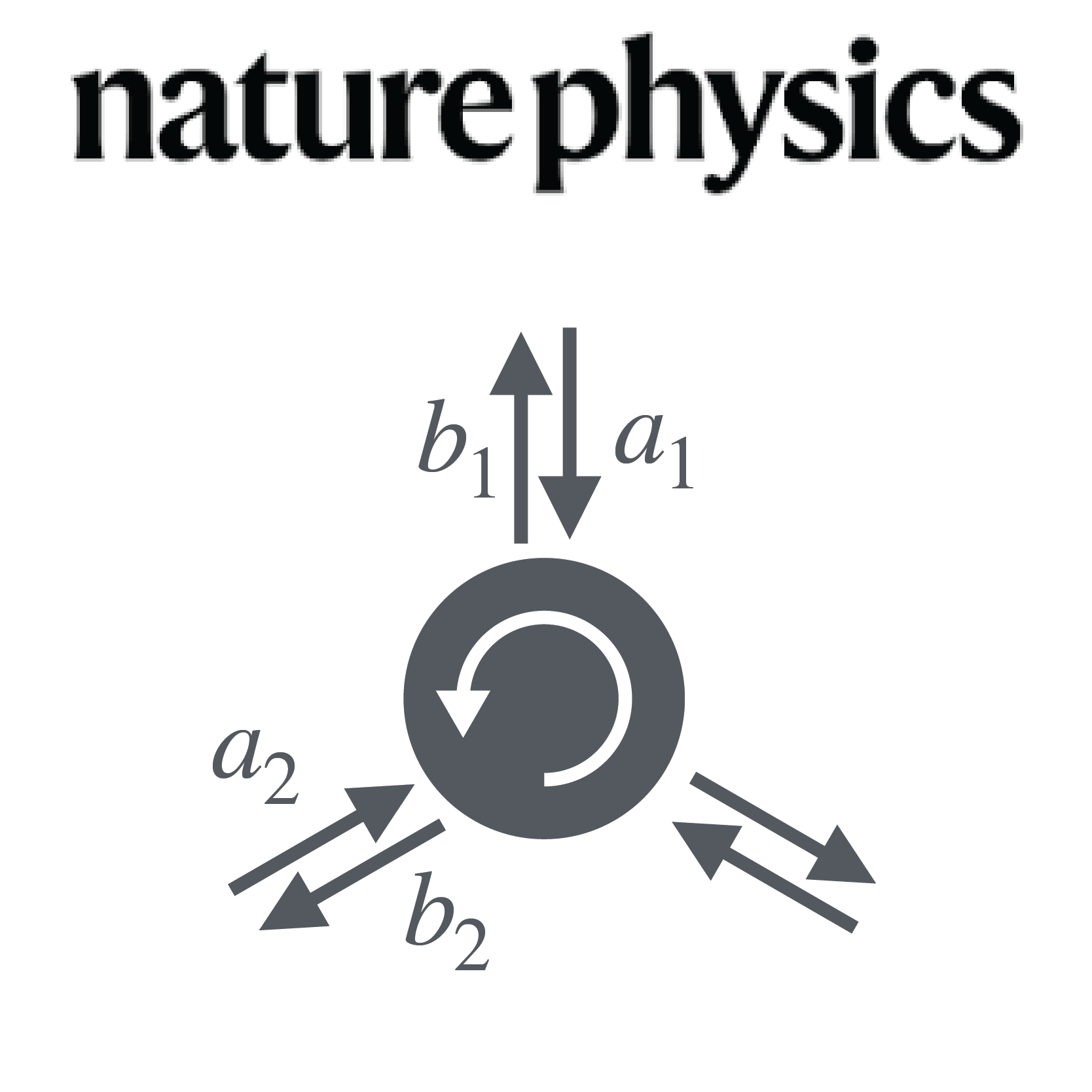
Nonreciprocity, the ability to allow signals to travel in only one direction, is a key ingredient in many modern signal-processing and sensing applications, as it prevents back-action from the receiver to the sender. Conventional nonreciprocal devices, however, typically rely on bulky and lossy magnetic components that are incompatible with the fragile superconducting and photonic systems used in quantum information processing. Researchers at WMI and around the world are therefore investing significant effort in the development of a new generation of compact, low-loss devices that achieve nonreciprocity without strong magnetic fields. These advances could enable more reliable quantum computers, distributed quantum networks, and ultra-sensitive sensors. Together with an international team of experts, Peter Rabl has summarized recent progress in this field in a comprehensive review article, which has now been published in Nature Physics.
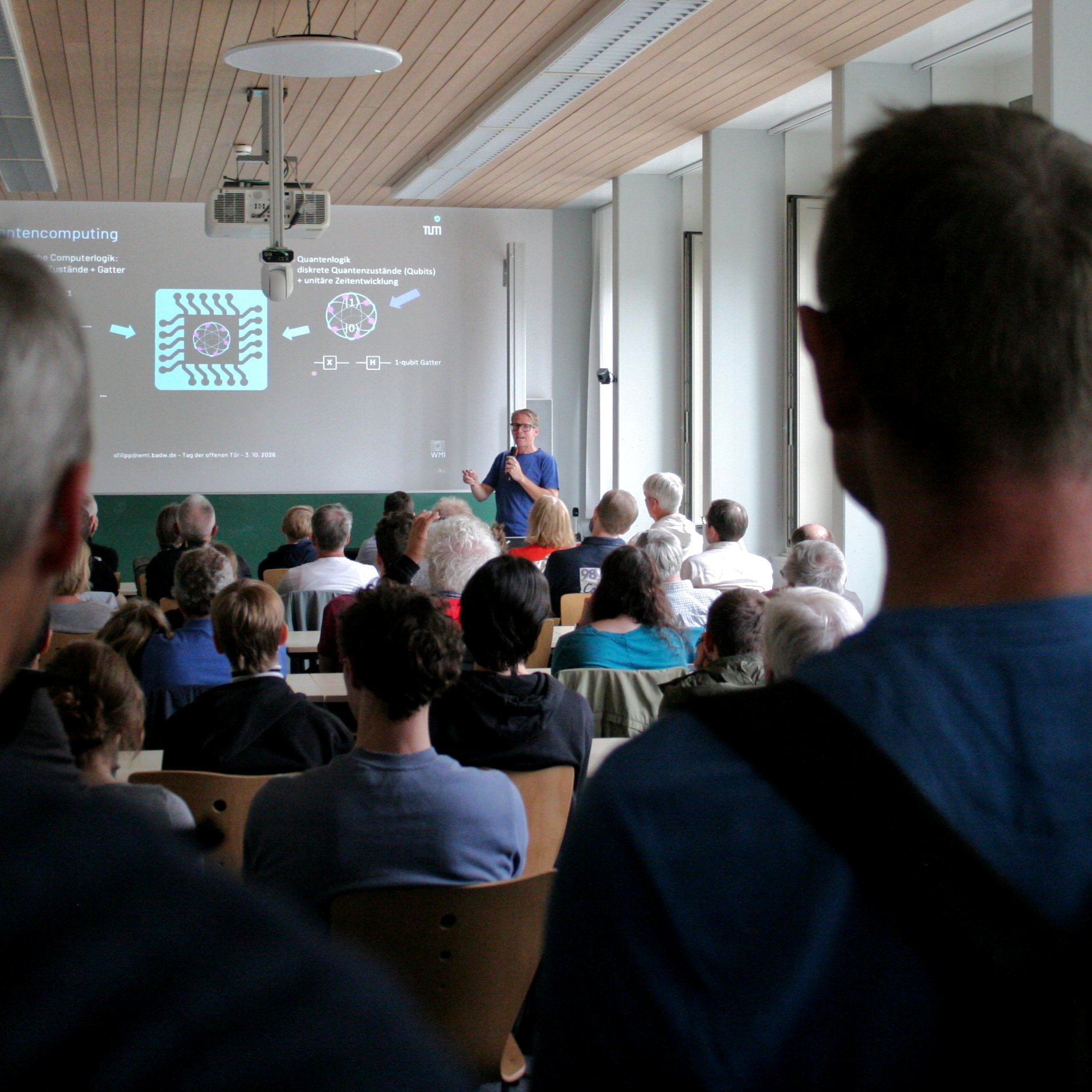
On Saturday, 3 October 2026, the WMI opened its doors to the public as part of the campus-wide Open House Day at the Research Campus Garching. From 10:00 to 17:00, more than 1000 visitors of all ages discovered how research works at temperatures close to absolute zero. At hands-on stations, they watched everyday objects freeze in liquid nitrogen, saw superconductors levitate on our WMI racetrack, and explored the quantum fountain. A live qubit demo showed how superconducting quantum bits are controlled and measured, while the nanofabrication stations gave insight into how quantum chips are made. Lab tours led visitors through selected laboratories, including the helium liquefaction plant, and in the seminar room Prof. Dr. Peter Rabl, Prof. Dr. Stefan Filipp, PD Dr. Matthias Althammer and PD Dr. habil. Sascha Mehlhase from MQV gave talks on quantum computing and quantum sensing. The Munich Quantum Valley booth complemented the program with information on basic quantum mechanics and current research projects.
Many thanks to all visitors and friends for their curiosity and questions, and to the WMI team for making this day possible!

Toward non-Gaussian control of ultra-coherent superconducting circuit optomechanics
On September 25, Assistant Prof. Shingo Kono from the Niels Bohr Institute, University of Copenhagen, visited the WMI and gave a seminar talk on superconducting circuit optomechanics. He presented an architecture for ultra-coherent superconducting mechanical membranes, which has enabled millisecond-scale mechanical squeezing, topological optomechanical lattices, and collective ground-state cooling. Looking ahead, he outlined a hybrid approach combining optomechanics with circuit QED as a route toward non-Gaussian quantum control of mechanical motion.
About the speaker
Shingo Kono is an Assistant Professor at the Niels Bohr Institute, University of Copenhagen. He received his PhD from the University of Tokyo in 2019 under the supervision of Yasunobu Nakamura and then worked at RIKEN. As a Marie Skłodowska-Curie fellow in the group of Tobias Kippenberg at EPFL, he studied hybrid systems of electromechanical devices and superconducting quantum circuits.
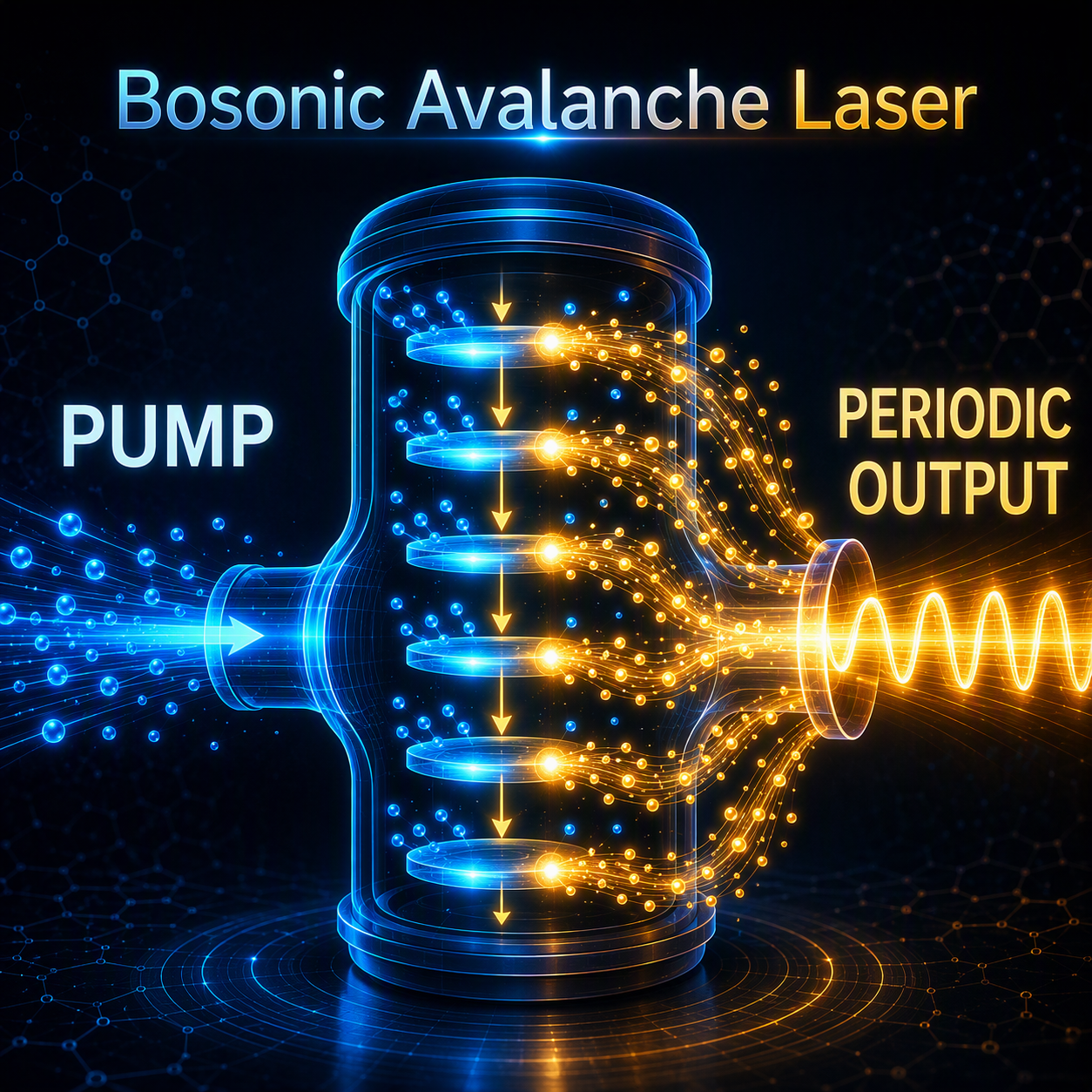
Researchers at WMI have proposed a new type of laser called a bosonic avalanche laser, where a stream of bosonic particles drives a chain reaction resembling an avalanche. Remarkably, random particle arrivals can generate a highly regular laser output, a phenomenon known as coherence resonance, usually associated with excitable systems such as neurons. Even under extremely weak signals, where quantum fluctuations are large, the device maintains surprisingly regular behavior. By converting single particles into amplified, easily detectable pulses, the system could enable ultra-sensitive quantum sensors. The team also outlines a superconducting-circuit implementation and demonstrates how the technology could function as a single-photon detector for microwave-frequency quantum signals.

Matthias Opel was invited to a MINT Career Information Day, organized by the Humboldt Academy of Science and Engineering (HASE) at the Humboldt-Gymnasium Vaterstetten, Germany. Being one of 22 speakers, he presented his daily life as a senior scientist in low temperature physics in four individual, 45-min sessions with 10 high school students each. Finally, he performed a 30-min show with liquid nitrogen for the general audience in the main auditorium and demonstrated the levitation of a high-Tc (YBa2Cu3O7−δ) superconductor above a permanent magnet.
