

Projects

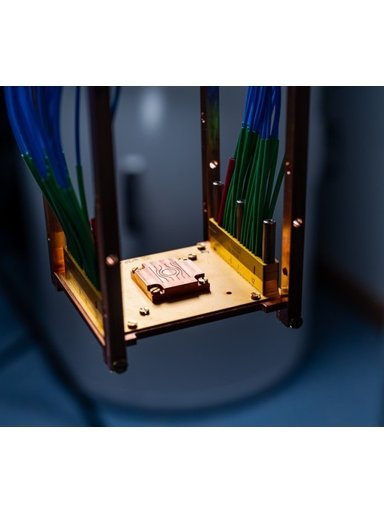
Munich Quantum Valley is the Bavarian initiative for quantum science and quantum technologies, with the primary goal of developing and operating competitive quantum computers in Bavaria. Its seven members - the Bavarian Academy of Sciences and Humanities (BAdW), the German Aerospace Center (DLR), the Fraunhofer-Gesellschaft, Friedrich-Alexander-Universität Erlangen-Nürnberg, Ludwig-Maximilians-Universität München, the Max Planck Society and the Technical University of Munich - work together in multidisciplinary consortia that follow a full-stack model: qubit hardware, cryogenic and control technology, compilation and error mitigation, algorithms, applications and integration into high-performance computing. MQV pursues several hardware platforms side by side, among them superconducting circuits spearheaded by WMI. In the first funding period, the consortia realised full-stack quantum-computer demonstrators in the noisy intermediate-scale (NISQ) regime and made them remotely accessible to research and industry. The second phase shifts the emphasis from demonstrating a working stack towards scaling it: larger and more reliable processors, higher gate and readout fidelities, systematic benchmarking, and the first building blocks of quantum error correction.The WMI contributes the superconducting-qubit hardware layer and its theoretical underpinning. The institute designs, fabricates and operates superconducting quantum processors in its own clean room and dilution refrigerators, with a focus on low-loss materials and fabrication, novel and intrinsically protected qubit types such as fluxonium, tunable and parametric coupling architectures, optimal-control and closed-loop calibration methods for high-fidelity gates, and scalable readout. Together with the other MQV partners, these contributions feed directly into the Bavarian quantum-computer demonstrators and their operation for external users.
Munich Quantum Valley e.V., Garching
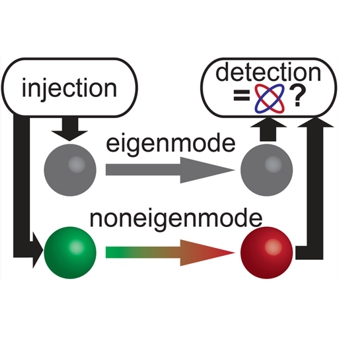
In two-sublattice antiferromagnets, magnons come in pairs of spin up and down eigenmodes, which is sometimes called magnon chirality. Some antiferromagnets host linearly-polarized magnons, which can be seen as equal superpositions of the two chiralities or spins. The full range of these magnon modes can be described effectively by mapping them onto a unit sphere and introducing the concept of magnon pseudospin, analogous to the electron spin. This tool has been foundational in the recently observed and established magnon Hanle effect, where the magnon pseudospin takes the role played by electron spin in the conventional Hanle effect. A key idea here is the robust injection and description of noneigenmode magnons. We propose that the corresponding concept and analysis in altermagnets should take a central role. We will develop the theoretical framework for understanding and execute non-local magnon transport experiments for establishing smoking gun signatures of altermagnetism in insulators, leveraging the high sensitivity achieved via pseudospin or chirality evolution. In this manner, we will uncover new devices and effects, such as transverse magnon Hanle effect, that specifically exploit altermagnetism. We will also uncover the crucial role of pseudospin evolution in altermagnetic magnon-mediated superconductivity, and develop materials for discovering the analogues of Hanle effect in three-sublattice non-collinear magnets harboring a new higher-dimensional magnon pseudospin. Due to the similarity between magnon pseudospin and electron spin, our work will additionally provide essential insights for electronic transport in altermagnets and introduce novel phenomena going well-beyond the realm of electronics.
Jairo Sinova (JGU Mainz)

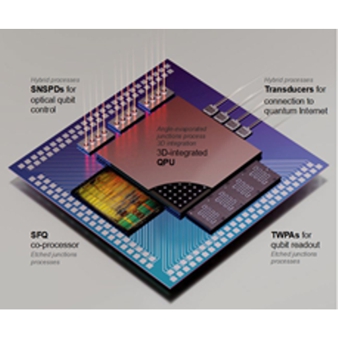
Superconducting quantum circuits are among the most advanced platforms for quantum computing, sensing and communication. What currently limits progress beyond laboratory prototypes is less the underlying physics than the fabrication: yield, repeatability and long-term stability. SUPREME (Superconducting European Quantum Pilot Line) addresses exactly this bottleneck. Over six years, the consortium develops stable, high-yield fabrication processes and opens them to European start-ups, SMEs, industry and academia through process design kits (PDKs) and shared piloting services, keeping process know-how and IP creation within Europe.SUPREME is coordinated by VTT (Finland) and funded by the EU Chips Joint Undertaking together with national funding agencies. It brings together 23 partners from eight EU member states and establishes three central fabrication sites, in Finland, Germany and the Netherlands. The German site is located in Garching and the wider Munich area. Supreme-DE, the German part of the pilot line, is carried by Peak Quantum, the Technical University of Munich together with the Walther-Meißner-Institut, the Max Planck Semiconductor Laboratory, Infineon Technologies, several Fraunhofer institutes (EMFT, IZM, IPMS, IAF) and the Leibniz Institute of Photonic Technology, closely coupled to the Munich Quantum Valley ecosystem.Technically, the pilot line concentrates on angle-evaporated and etched Josephson junctions, 3D integration methods and hybrid quantum processes. These are validated in pilot-line demonstrators: 3D-integrated qubit assemblies for large-scale quantum processing units, travelling-wave parametric amplifiers and superconducting nanowire single-photon detectors. The first validated processes are to be released to external users via PDKs in 2027.At the Walther-Meißner-Institut, the project builds on many years of experience with the fabrication and characterisation of superconducting circuits. The institute contributes low-loss materials and process development in its own clean room and, in particular, device-level qualification: resonator and junction test structures, measurements of qubit coherence and gate fidelity, and the feedback from measured device performance into process parameters. This closes the loop between wafer-level process control and the figures of merit that ultimately matter for a quantum processor.
Jorden Senior, VTT Technical Research Centre of Finland

Highly sensitive optical quantum detectors—known as superconducting nanowire single-photon detectors (SNSPDs)—constitute an important key component for the efficient processing and transmission of quantum information.Scalable and high-quality SNSPDs are therefore of fundamental importance for markets such as secure optical data transmission over the Internet via Quantum Key Distribution, quantum networks, and quantum computing. The central objective of the collaborative project is to enhance SNSPDs with respect to their signal-to-noise ratio—that is, to improve their detection quality.This technological advancement is of critical importance for many future applications—such as quantum networks and quantum computing—since, generally speaking, even more precise detectors than those currently available will be required to process quantum data with minimal error. This reduces the need for error correction and ultimately leads to significant cost savings. From a technological perspective, this translates into three core objectives for the consortium: optimizing the design of the detector chips, improving the cleanroom manufacturing processes for the SNSPD chips, and further developing the readout electronics.
Dr. Andreas Vetter (Munich Quantum Instruments GmbH)
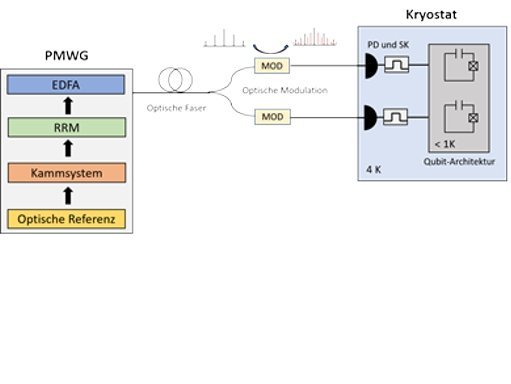
Kryowave pursues an architecture in which ultra-stable optical signals are converted into lownoise microwave control tones directly at cryogenic temperatures, thereby lowering microwavecable count and thermal load between room temperature electronics and the quantum processor. By combining advanced photonic components with adapted superconducting circuitry, the consortium aims to outperform purely electrical control stacks used in current state-ofthe-art platforms.The project is conducted jointly by the Walther-Meißner-Institut (WMI), Fraunhofer HHI, PeakQuantum GmbH, and Menlo Systems GmbH as the coordinator. It is pooling expertise in superconducting quantum devices and cryogenics (WMI), integrated photonics and high-speedphotodiodes (Fraunhofer HHI), ultra-stable laser and frequency-comb systems (Menlo Systems), and industrial superconducting qubit fabrication (Peak Quantum).
Menlo Systems
Superconducting quantum circuits have emerged as one of the leading technology platforms for achieving a near‑term quantum advantage in various information processing tasks. This advancement has been based on the successful scaling of superconducting qubit numbers over a hundred transmons, improving superconducting circuit designs, and exploiting novel materials. As a result, several research teams have demonstrated reaching break-even points in quantum error corrections protocols or even beyond. At the same time, further progress in quantum computing using single-chip architectures is becoming more daunting because of qubit crosstalks as well as the spatial limitations of modern dilution fridges. A well-known recipe for solving these problems originates from the classical supercomputing architectures - to rely on a distributed, or modular, information processing approach. In application to quantum circuits, it means distributing individual quantum circuits with a moderate number of qubits, or other quantum systems, across individual cryogenic modules and, furthermore, in separate dilution fridges. The arising challenge is to find the most efficient ways of entangling and coherently manipulating these remote quantum modules across local area quantum networks. The task of establishing remote entanglement between individual qubits and implementing remote quantum gates represents a basic building block for future distributed quantum networks. Here, we intend to study and implement several key experiments towards realizing this task.
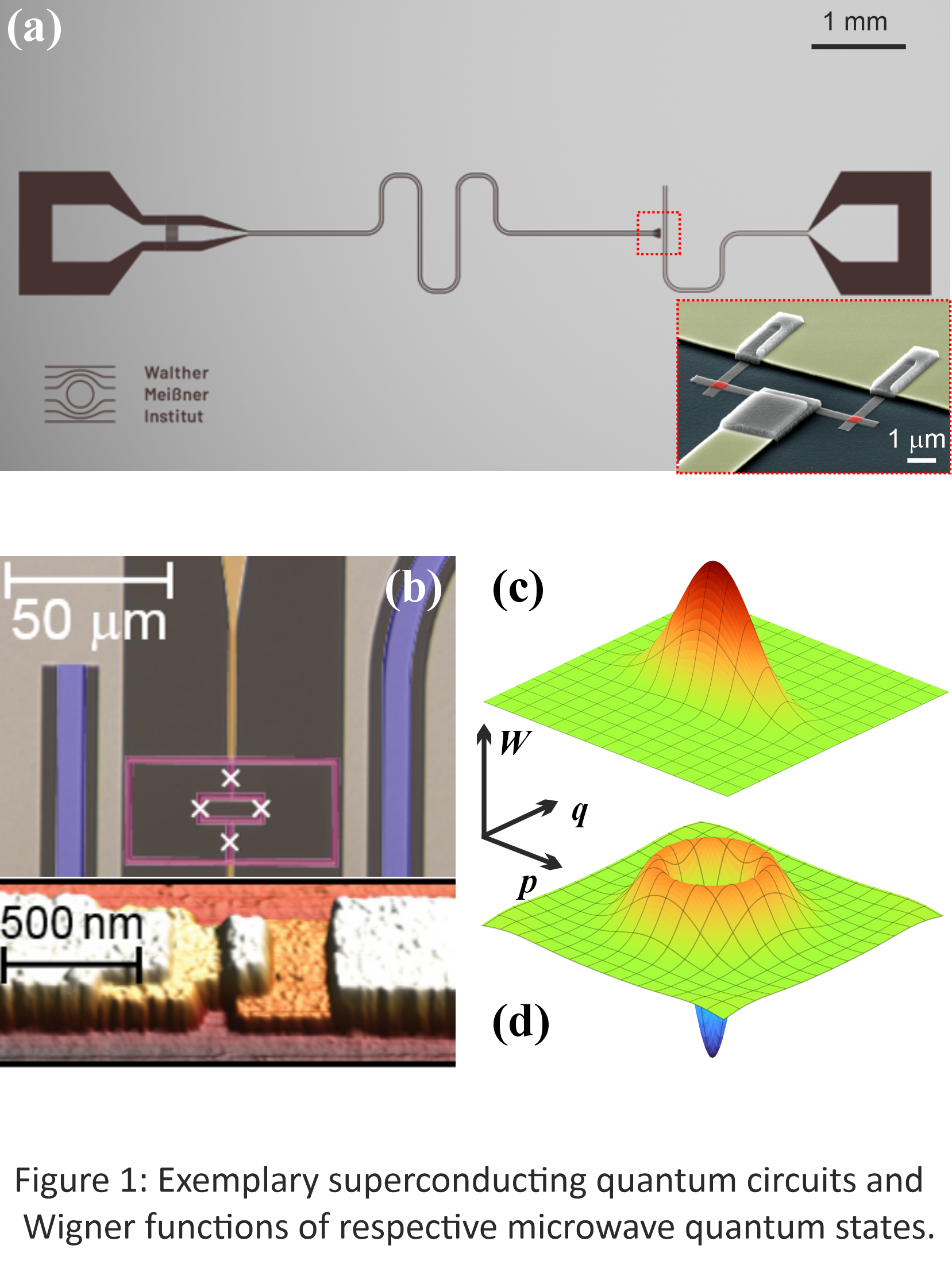
A particularly novel way to distribute entanglement between quantum nodes is to exploit Gaussian entangled states. In these protocols, one relies on a distributed two-mode entangled state, or bath, which may be off‑resonantly coupled to the remote qubits, thus avoiding some limitations of the QST approach. Moreover, theoretical works predict a possibility of entanglement distillation in this regime which allows to overcome moderate transmission losses. The necessary entangled two-mode states for these remote entanglement protocols can be conveniently generated with squeezed vacuum states generated by Josephson parametric amplifiers (JPAs) in the steady-state regime. Figure 1(a),(c) illustrates a particular flux-driven JPA design and the Wigner function of a related continuous-variable (CV) squeezed vacuum state. Discrete-variable (DV) Fock states correspond to the computational basis of modern gate-based quantum computing platforms and are routinely generated by superconducting qubits. Figure 1(b)(d) shows a particular flux qubit and the Wigner function of a single-photon DV state. A combination of the DV states emitted by qubits with the squeezed CV states forms the basis for the novel hybrid-variable regime of quantum communication. We imply that in hybrid-variable experiments, the corresponding CV and DV quantum states may be freely superimposed or mixed during various operations and quantum gates. The HVMQC goal is to develop fundamental understanding how quantum correlations are converted between continuous and discrete degrees of freedom, how various quantum states thermalize in nonlinear noisy networks, with a possibility of finding quantum scar states in the microwave regime. From the practical side, the realization of hybrid-variable microwave quantum communication protocols is directly connected to implementation of distributed quantum computing architectures and promises to resolve the challenge of superconducting qubit scaling beyond the modern thresholds imposed by individual cryostats.

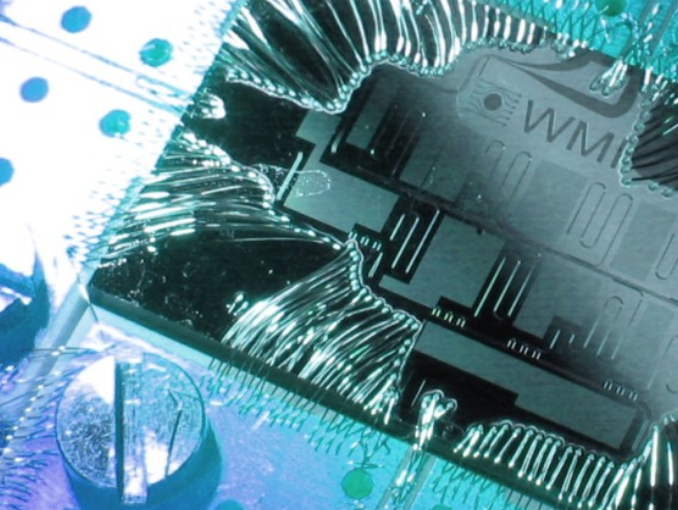
Quantum Mechanics and Information Science have revolutionized our modern world beyond imagination. Whilst quantum mechanics forms the basis for our understanding of the microscopic world, information science is the basic building block for information processing and communication in our digital age. Today we are witnessing a scientific and technological revolution in which Information Science and Quantum Mechanics no longer stand as separate entities, but have rather been united in the common language of Quantum Information Science. First developed to describe the working principles of future Quantum Computers, Quantum Information Science has emerged as an even more powerful description of our physical world, with wide ranging relevance, directly linking fields such as quantum materials and quantum chemistry to seemingly disparate fields such as the cosmology of black holes. At the core of this description is the notion of entanglement, an essential feature without any classical analogue that is responsible for a plethora of astonishing phenomena and applications of Quantum Physics.
These dramatic developments have led to the new combined research field of Quantum Science and Technology (QST), in which these diverse topics, their interconnection as well as their consequences for practical applications are being explored. QST unites multidisciplinary research across physics, mathematics, computer science, electrical engineering, materials science, chemistry, and recently, even cosmology and high energy physics.The core goal of the Munich Center for Quantum Science and Technology (MCQST) is to discover and understand the novel and unifying concepts in the interdisciplinary research fields of QST and to make them tangible and practical, to develop the extraordinary applications within reach by building next-generation quantum devices.
At a fundamental science level, this includes the comprehensive understanding and control of entanglement in quantum many-body systems spanning different time, length and energy scales, through novel theoretical and experimental approaches in quantum information science. Applications for Quantum Devices and Materials to be developed at MCQST range from inherently secure communication and processing of information to ultrasensitive sensors and transducers for precision metrology.Munich is in a unique position to form such a world-leading research center in QST due to its longstanding experience, broad and proven interdisciplinary expertise, and outstanding excellence of the participating senior and junior researchers in all core fields of QST. Developing education and support for junior researchers in QST as well as advancing the strengths of Munich research structures within MCQST will ensure long-term and high-impact research as well as an ideal entry point for industry in this increasingly important field. It will allow Munich to achieve an outstanding visibility and assume a leading position in QST research.

Immanuel Bloch (LMU, MPQ)
Ignacio Cirac (TUM, MPQ)
Rudolf Gross (BAdW, TUM)


In August 2020, the spokespersons of the Excellence Cluster MCQST – Immanuel Bloch, Ignacio Cirac and Rudolf Gross – started an initiative to establish the Munich Quantum Valley. In a strategy paper, written with support of Max-Planck Vice President Klaus Blaum and FhG Research Director Raoul Klingner, they pointed out that the larger Munich area with its excellent research institutions as well as its active industrial, high-tech and venture capital environment is ideally suited to establish a unique European center for quantum science and technology (QST).
Financial support of MQV was immediately included into the Bavarian «Hightech Agenda Plus». Meanwhile, a Memorandum of Understanding has been signed by Prime Minister Söder and the presidents of the five founding research organizations (see MQV Kick-off event). For 2022/23, a budget of 120 Mio. € is already allocated and a total budget of 300 Mio. € is planned. By MQV, Bavaria as a whole will be developed into a leading international center with the potential to attract the best researchers and open up new opportunities for Bavaria as a business location in this innovative field. To implement MQV, the following three-point plan was proposed in the strategy paper will be implemented:
- Foundation of a Center for Quantum Computing and Quantum Technology to foster networking with industry, to develop priorities in QST R&D, and to coordinate the allocation of funding with the following priorities:
- Development, realization and operation of quantum computers based on a longterm institutional funding to guarantee international competitiveness.
- Support of basic science and development of basic quantum technologies within so-called lighthouse projects.
- Technology transfer to industry and start-ups.
- Establishment of a Quantum Technology Park to provide the technological infrastructure for the development and fabrication of quantum devices.
- Qualification and Education of the next generation of quantum experts in natural and computer sciences as well as engineering, including training and re-education of skilled employees in industry.
Initiated by:
Klaus Blaum, Immanuel Bloch, Ignacio Cirac, Rudolf Gross, Raoul Klingner

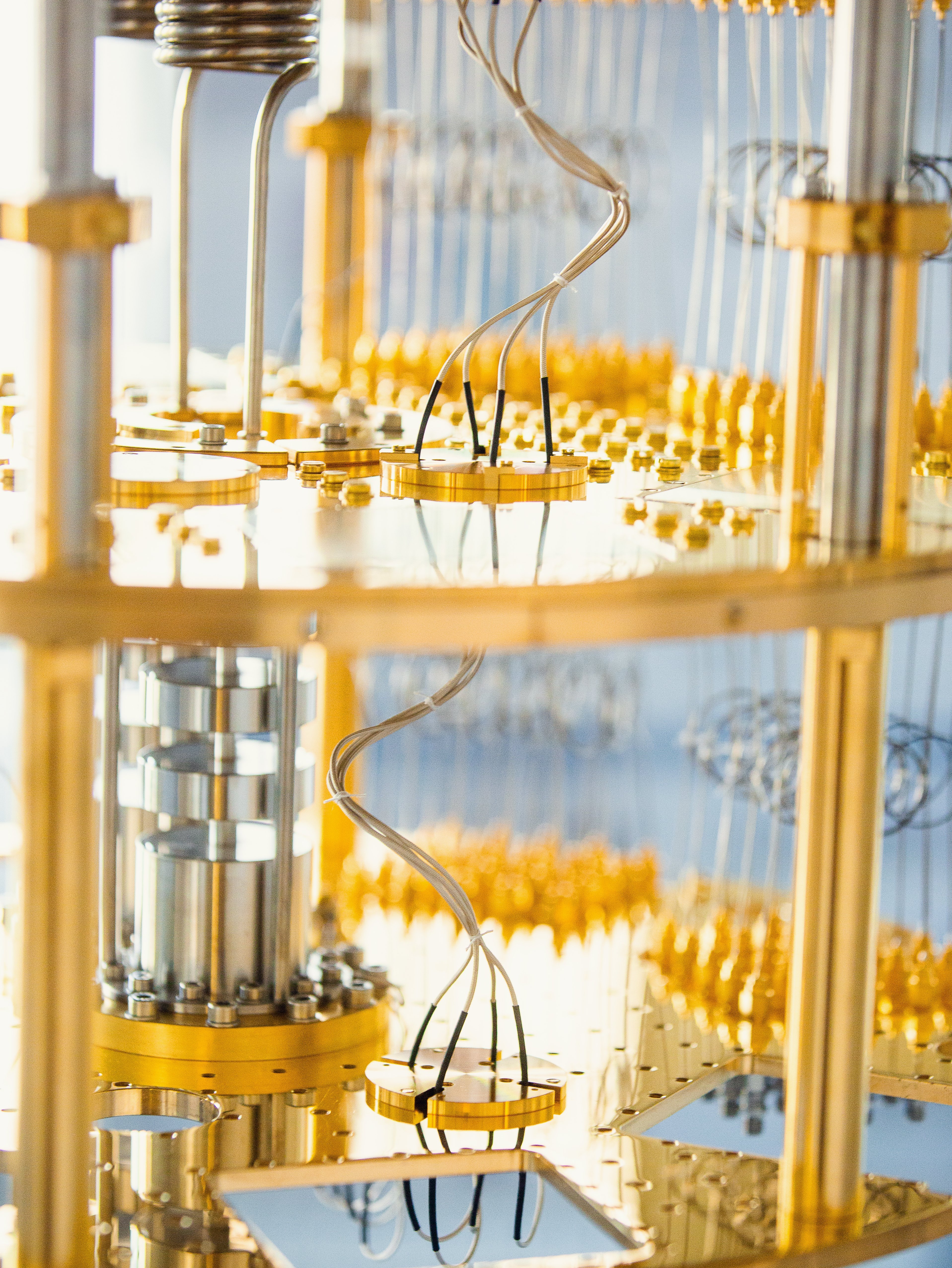
Stefan Filipp (WMI)
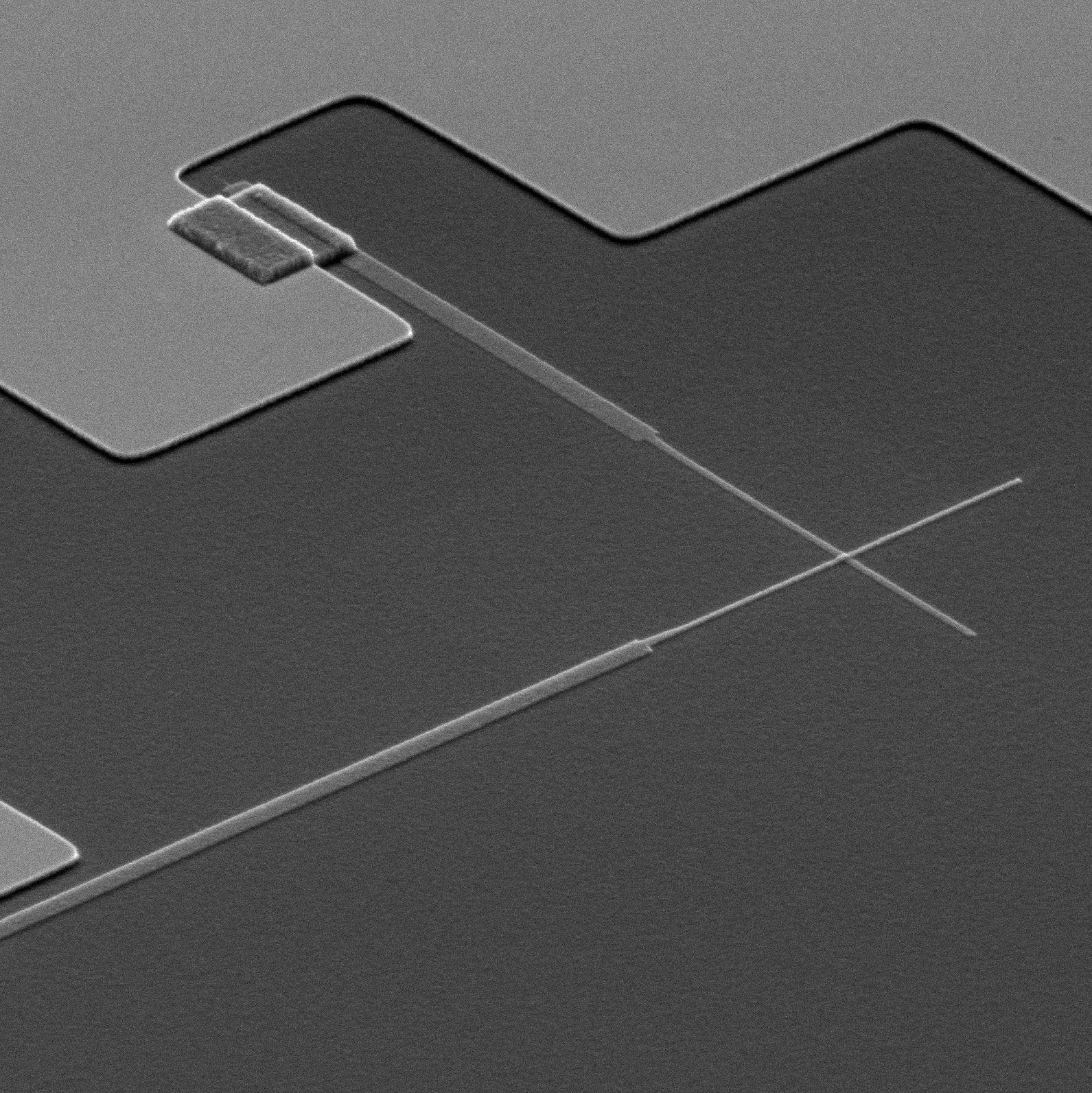
Despite the impressive development progress concerning the superconducting qubit platform in Germany and Europe, research and development challenges still need to be addressed. This includes scalability to higher number of qubits and faster learning cycles to speed up the performance improvement. Only by solving these challenges technological sovereignty and the access to competitive quantum computers at a national and European level are ensured.
The efforts within the project QuantumSPICE can be categorized into three topics: (1) scaling and reproducibility, (2) materials development, and (3) development of fast in-line characterization.
The scaling efforts involve investigating frequency targeting and reducing the qubit's footprint. Another goal is to research and optimize material combinations and new fabrication strategies. The focus here is on improving the performance of Josephson junctions. The partners are investigating different material systems for future integration and scaling. Within the consortia, new innovative solutions for rapid in-line characterization at room temperature and low temperatures are being investigated to ensure that learning cycles can be sped up.
Infineon Technologies AG
Matthias Althammer
The research center started in October 2023 and brings together researchers at the University of Augsburg, the Technical University of Munich, the Max Planck Institute for Solid State Physics, the University of Leipzig, the University of Tokyo, and the Walther-Meissner-Institute of the Bavarian Academy of Sciences and Humanities. In 18 projects, 32 PhD and postdoctoral researchers will address questions on magnetic band topology, entangled states of matter, and non-equilibrium dynamics in selected solid-state systems. The basic guiding principle is that a reduction of the degrees of freedom through suitable constraints can yield exciting physical phenomena. Our approach will facilitate the realization as well as detection of quantum entanglement and the exploration of novel quantum effects in solid-state materials with the long-term goal of stabilizing them at practical conditions, thus fostering applications on a broad scale.
At the Walther-Meissner-Institute, a team around Hans Huebl and Stephan Geprägs will team up with Christian Pfleiderer and Mark Wilde from the School of Natural Sciences of the Technical University of Munich to investigate the properties of quantum materials in non-equilibrium situations using multiple excitation and detection techniques. For example, we plan to drive low-energy excitations by intense microwave radiation while the response function is probed with a second probe. This approach aims at (i) investigating and understanding the coupling between spin, orbital, lattice or nuclear spin degrees of freedom under intense resonant microwave radiation, (ii) a targeted driving of quantum excitations such as topological magnons, orbitons or topological electronic quasiparticles, (iii) inducing non-thermal melting of long-range order by intense microwave radiation, and (iv) realization of dynamical forms of quantum order in bulk materials such as time crystals or many-body localization.
Coordinator: Prof. Dr. István Kézsmárki (University of Augsburg)
At the Walther-Meißner-Institute, we focus on the investigation of the nature of angular momentum and its transport through lattice excitations, i.e. phonons. The angular momentum in lattice excitations can be described as the rotational motion of the atoms around their rest position, which can be generated by a suitable superposition of linear vibrations or is caused by the symmetry of the lattice. The investigation of angular momentum in phonons requires the ability to excite phonons in a controlled manner with a defined sense of rotation or circular polarization. For this purpose, we will use magnetic excitations with their precession chirality given by the gyromagnetic ratio by coupling a magnetic system to the phononic system. We plan to study the transfer of angular momentum between the magnetic and lattice excitations, to use this to generate phononic angular momentum and its detection, and thus to study angular momentum transport both in bulk and in phononic micro- and nanostructures with tailored phononic properties.
Coordinator: Uli Nowak (University of Konstanz)

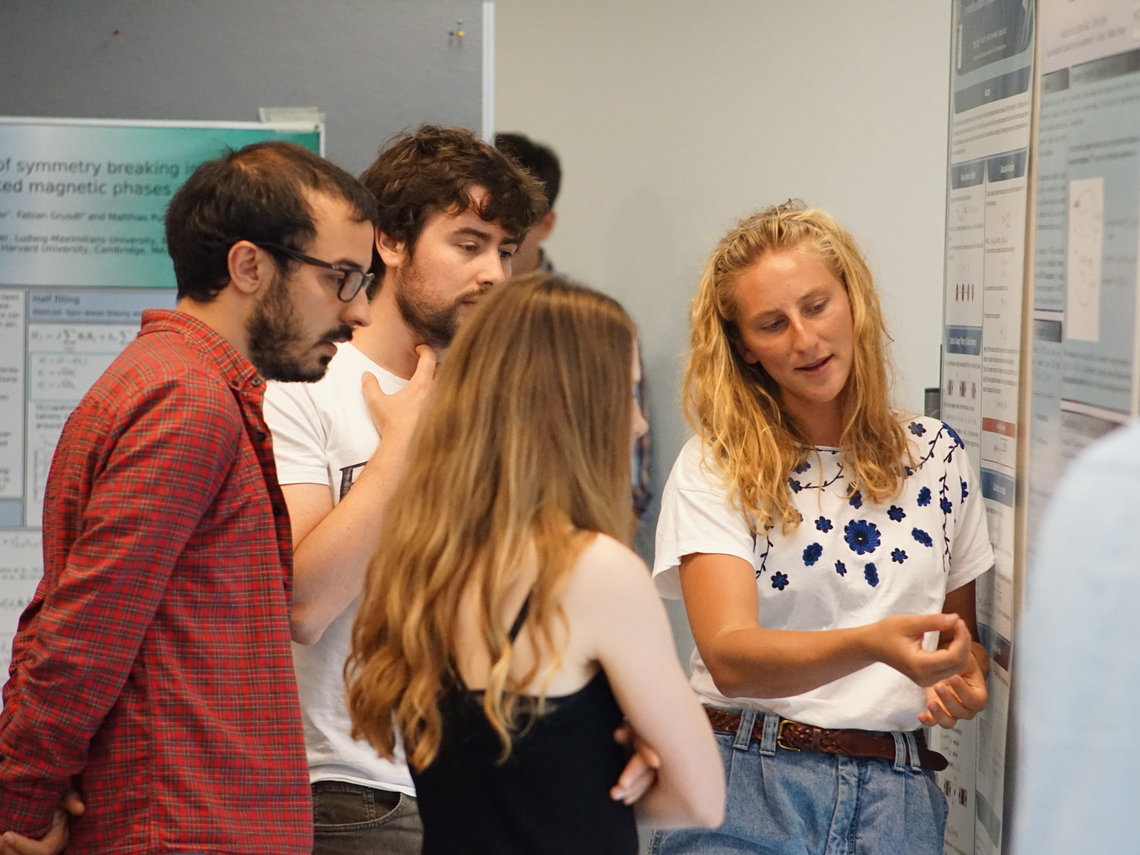
The International Max Planck Research School for Quantum Science and Technology is a joint program of the Max Planck Institute of Quantum Optics, the Ludwig-Maximilians-Universität München and the Technical University of Munich. It offers an excellent and coherent graduate program across the fields of atomic physics, quantum optics, solid state physics, material science, quantum information theory, and quantum many-body systems.
First and foremost, IMPRS-QST provides a platform of joint activities for a large research community, encouraging better networking and scientific exchange as an integral part of doctoral training.
IMPRS-QST students can either get directly admitted to the program through our yearly application process or join as members after starting their PhD at one of our associated research groups.
Ignacio Cirac (MPQ, TUM)

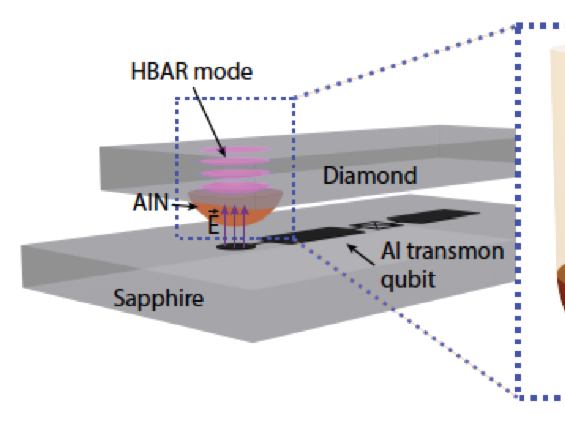
While the experimental implementation of the acoustic interface will be mainly carried out by the groups of Prof. Yiwen Chu and Prof. Christian Degen at ETH Zurich, the Theory Division at WMI, led by Peter Rabl, will be responsible for modelling the system and for developing optimized transfer protocols, which are compatible with the weak spin-phonon couplings and relevant decoherence processes in the system. Here the team can build on the existing expertise in the group on spin-phonon interactions, phononic quantum networks and noise-mitigation strategies.
Yiwen Chu (ETH Zurich)